





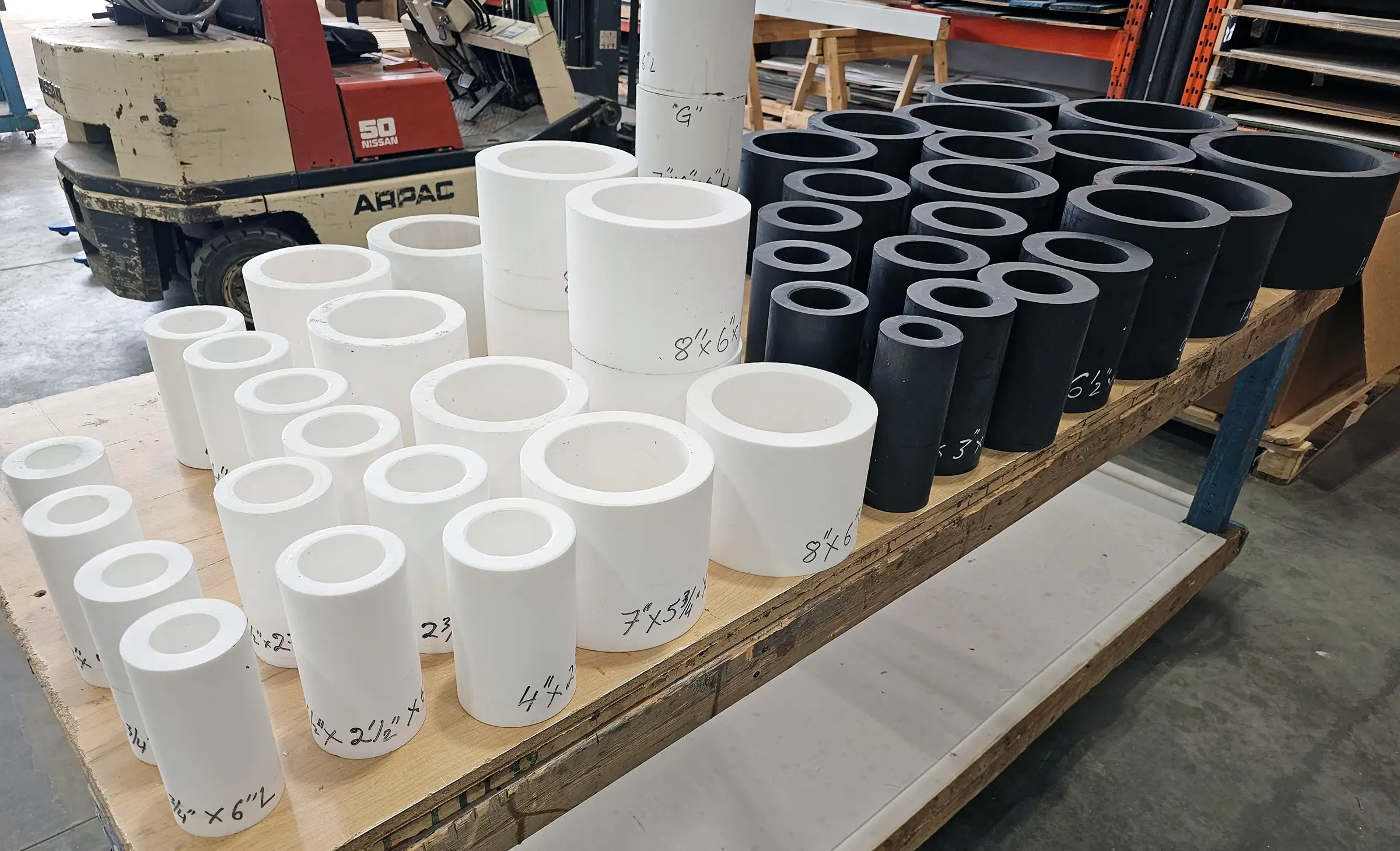
UHMW, HDPE, nylon, and other engineering plastics dimensioned to your cut list. Square, on size, edges cleaned up, ready for your crew or ours to work with. If you only need stock in standard forms without fabrication, the plastic stock supply covers straight material orders.
Profiled liner packages for chutes, hoppers, bins, and truck boxes; wear strips for conveyors and guides; skid plates and rub blocks. This is the highest-volume fabrication work for mining and agriculture customers, and most of it is UHMW.
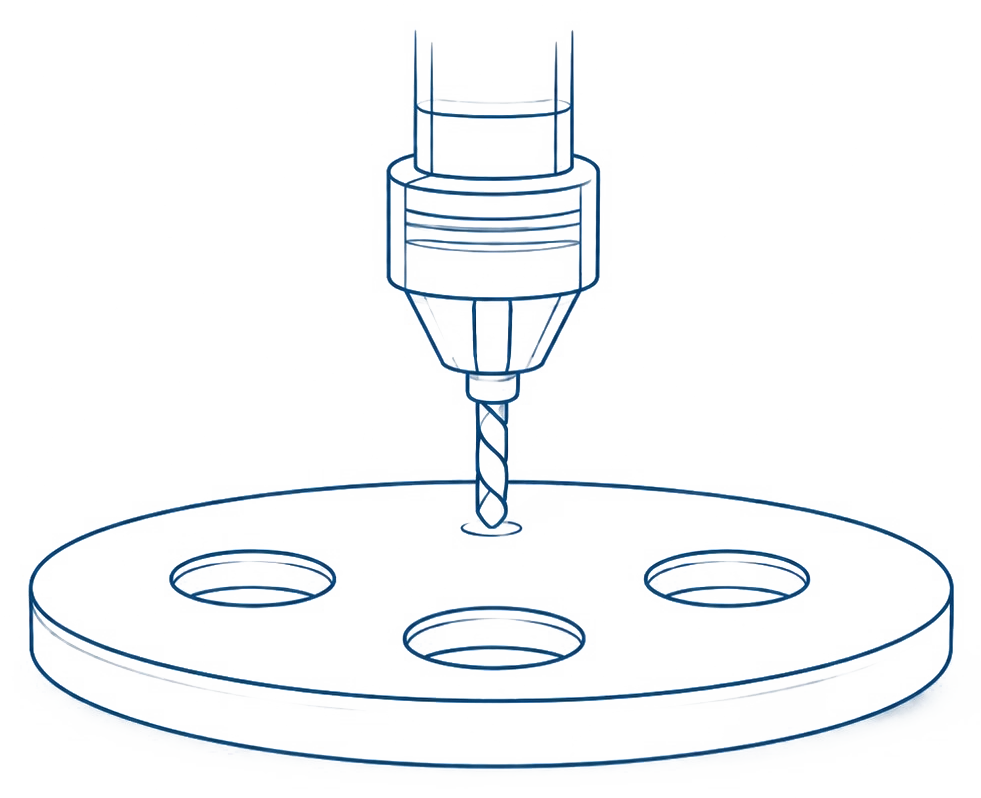
Bolt patterns, countersinks, and counterbores put in before the material ships, so a liner lands on site as a bolt-in part instead of a drilling project at height. One detail worth knowing: UHMW expands and contracts far more than the steel it bolts to, so mounting holes on longer liners are typically oversized or slotted to let the material move. Fabricating that in from the start prevents buckled liners in July.
Multi-part components fitted and assembled, edges radiused or chamfered, and surfaces finished where the application calls for it.
The line between the two matters because it changes how the work is quoted. Fabrication is dimensioning and shaping stock — cuts, profiles, holes, edges. Machining is chip-cutting operations that create toleranced features: pockets, threads, bores, contoured surfaces held to a drawing. A one-inch UHMW liner cut to a cardboard template with six slotted mounting holes is fabrication. A Delrin bushing with a reamed bore and a shoulder is a job for the machine shop.
Plenty of jobs are both, and that's fine — a fabricated liner package with a handful of machined components ships as one order. Describe what you need and Pepco will route it correctly; you don't have to.
Fabrication specs arrive in every form imaginable, and nearly all of them work. A DXF of a liner profile is ideal for repeat parts. A dimensioned PDF works. So does a cardboard template with "make this in 1" UHMW, need 8" written on it in paint marker — that is a normal Tuesday in a fabrication shop, and it produces a perfectly good part as long as the template is accurate.
A typical fabrication project runs like this: you send the spec or template with material and quantity through the RFQ page, Pepco confirms material availability and quotes the work, you approve, and finished parts ship with the cut list verified. For repeat liner packages, the profiles stay on file so the next order is a phone call. Field measurements are your responsibility unless otherwise arranged — measure the worn liner's mounting pattern, not the worn wear face, since the wear face is by definition no longer the right shape.
Common industrial liner work runs from quarter-inch through multi-inch UHMW and HDPE plate, and Pepco fabricates across the standard range. For unusually thick sections or oversized sheets, confirm the specific dimensions in your RFQ.
In most sliding-abrasion applications, yes, and it's one of the most common fabrication requests. The existing bolt pattern can usually be matched, with holes slotted or oversized to handle UHMW's thermal movement. High-impact zones and hot processes deserve a closer look first — send the application details and Pepco's team can confirm whether UHMW is the right call before you order.
Send your cut list, liner template, or profile drawing through the Request a Quote page with material and quantity. Whether it's a full liner package for a transfer chute or one wear strip to get a conveyor guide back in service, Pepco's fabrication quote will tell you exactly what ships and when.