






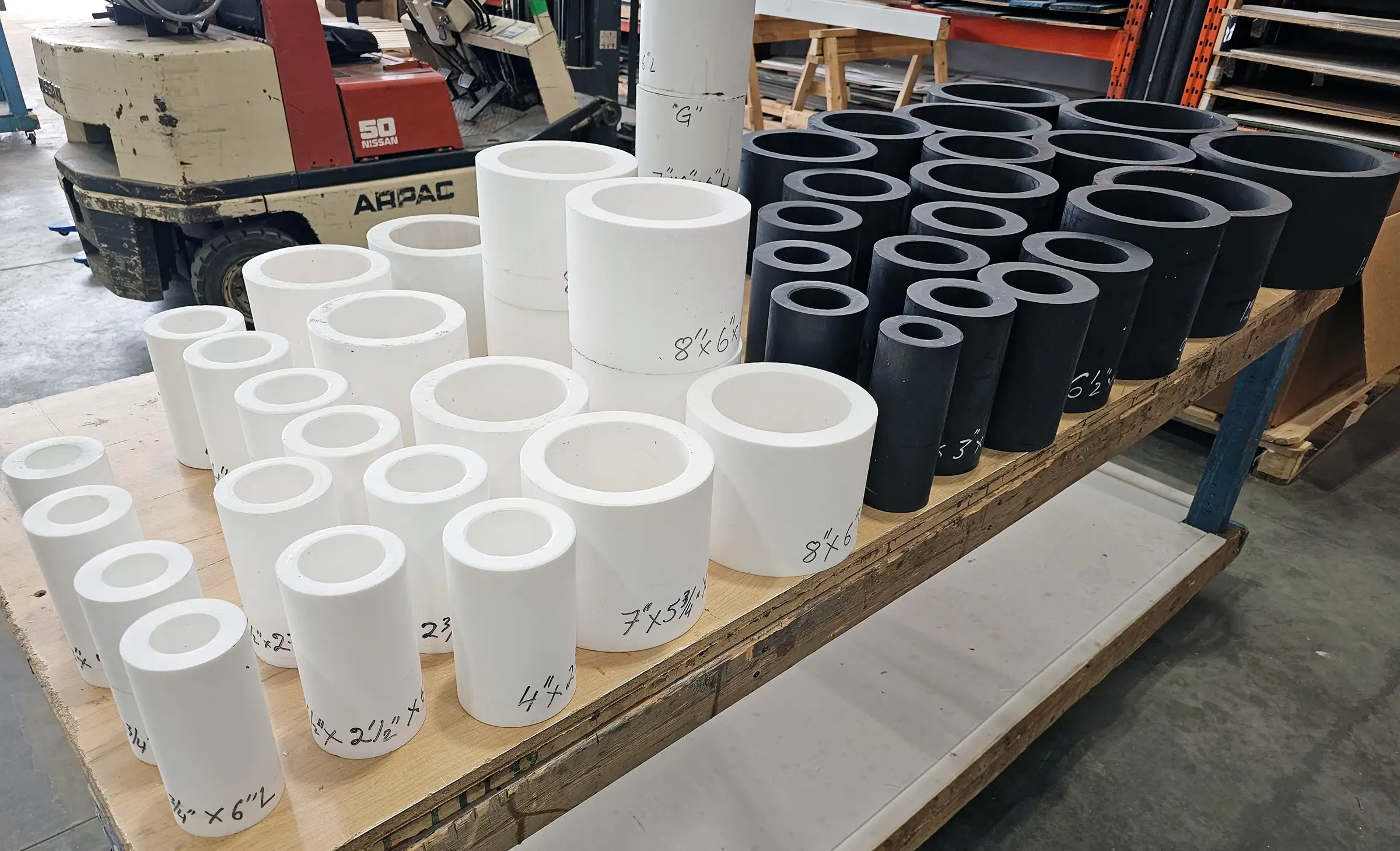
Two plastics can look nearly identical on a shelf and behave completely differently in service. UHMW resists abrasion better than almost anything but moves more than most people expect with temperature. Nylon is strong and self-lubricating but absorbs moisture and swells slightly in humid environments. Delrin holds tight tolerances but doesn't like sustained UV exposure. None of these are defects — they're tradeoffs, and the right answer depends entirely on what the part actually has to survive. The published guidance on material properties is genuinely useful, but it's generic by nature. The value in asking Pepco directly is applying that guidance to your specific part, your specific environment, and the failure mode you're actually trying to avoid, rather than the one a datasheet happens to warn about.
Have a material question, a part that's failing, or a drawing you'd like a second opinion on? Send the details through the Request a Quote page — describe the application, the conditions, and what you're trying to solve. You'll get a straight answer, whether or not it turns into an order.